
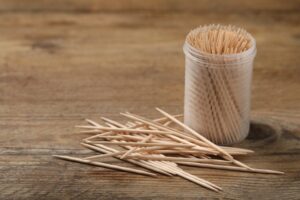
Toothpicks are commonly used to remove food stuck between teeth, especially after meals. While they may seem like a quick and convenient solution, many people wonder whether toothpicks are actually safe for their teeth and gums. The answer is that toothpicks can be helpful in certain situations, but they should be used with caution and are not a substitute for proper oral hygiene.
The Benefits of Toothpicks
Toothpicks can be useful for dislodging food particles that are stuck between teeth, particularly when floss isn’t immediately available. Removing trapped food can help reduce discomfort and prevent bacteria from feeding on leftover debris, which may lower the risk of cavities and bad breath.
When used gently and occasionally, toothpicks can serve as a temporary solution until you can properly brush and floss your teeth.
Potential Risks of Using Toothpicks
Despite their convenience, toothpicks can pose risks if used improperly or too frequently. One of the main concerns is damage to the gums. Sharp or pointed toothpicks can easily irritate or puncture gum tissue, leading to soreness, bleeding, or even infection.
Frequent use of toothpicks can also contribute to gum recession over time. Pushing a toothpick too hard between your teeth may create small gaps or worsen existing spaces, making it easier for food to get trapped in the future.
Additionally, wooden toothpicks can splinter, which may cause further irritation or injury inside your mouth.
Toothpicks vs. Floss
While toothpicks can remove larger pieces of food, they are not as effective as dental floss. Floss is specifically designed to clean between teeth and along the gumline, where plaque and bacteria tend to accumulate.
Using floss daily helps prevent cavities and gum disease more effectively than relying on toothpicks alone. Interdental brushes or water flossers can also be good alternatives, especially for people with braces or wider gaps between teeth.
How to Use Toothpicks Safely
If you choose to use toothpicks, it’s important to do so carefully. Use gentle pressure and avoid forcing the toothpick between tight spaces. Opt for toothpicks with rounded or softer tips when possible, and never use them in place of your regular oral hygiene routine.
It’s best to think of toothpicks as an occasional convenience rather than a daily habit.
Toothpicks aren’t necessarily bad for your teeth, but they should be used sparingly and with care. Relying on proper brushing, flossing, and regular dental checkups is the best way to maintain a healthy smile. By using the right tools and techniques, you can keep your teeth and gums in great shape while avoiding unnecessary irritation or damage.
About the Author
Dr. Carla Bustillo-Gonzalez brings more than 20 years of experience in general dentistry to the Tewksbury community. She earned her dental degree at the Goldman School of Dental Medicine at Boston University before completing an internship at the Tufts University School of Dental Medicine in esthetic dentistry. Dr. Bustillo-Gonzalez is active in study clubs in Boston and is also a member of the Massachusetts Dental Society. If you’re experiencing a dental emergency, don’t delay – schedule online or call (978) 851-7112.